Showing posts with label Boating. Show all posts

Wednesday, 2 November 2011

Turn The Attic Into A Bathroom


Have you ever had a problem when there are not enough bathrooms in your own home? The solution of course will be to construct another one. So why not turn the attic into a bathroom?

Turning the attic into a bathroom or any other living space requires planning. The key to making this happen is coming up with the perfect design that will allow you to maximize every square foot of this place.

You can’t have a bathroom without a shower. Since there are so many to choose from, you should go for the wet room style shower to increase the sense of space. Make sure you consult with a good supplier on the showerhead and tiles who can give good advice to make the room feel spacious and light.

If you want to put a bathtub there, make sure the structure in the bottom can handle the weight. These same goes for your vanity table and toilet by supporting the walls and floor. For those using wood, replace the old 2x4’s or 2x6’s with 2x8’s. If this is not possible, add more of the old ones to support it.

Homeowners who are using wood for the renovated attic must apply oil to protect this against water. You can even use the same material for the flooring since there are variants that are engineered for use in the bathroom.

This can then be painted with specially formulated bathroom paint with a plastic base that is also water resistant so it can easily be wiped down.

For sloping walls, you can easily make use of that by installing shelves which can be used to store your towels and other linen.

As for electricity and plumbing, make sure this is connected to the nearest possible source. This will ensure that your heater is working when the weather is cold outside and there is light.

The bathroom will also require a ventilation fan. Without one, you will notice that the room looks foggy, molds will grow in between the grouts, paint will peel off the walls and your towels will be damp. To avoid this from happening, you should choose the right fan based on the size of the room and also the one that produces the less noise so you won’t get any complaints from the neighbors.

Another thing you have to work on is better access to the renovated attic. This should be bigger or wider whichever is necessary and there must be anti-slip pads on the staircase so no one will get into an accident after coming out of the shower.

Before you can turn your attic into a bathroom, make sure you get all the right permits from the mayor’s office. If you don’t have the skill to make this happen, hire a contractor who has been doing this for a very long time and has the reputation to do the job.

Once you have these details in order, it is just a matter of time before you will see a big difference in your home and no one will no longer have a problem whenever they need to use the bathroom.  Since renovating is still an expense and you need cash for the project, why don’t you hold a garage sale and use the proceeds to partially pay for the construction costs?

Yacht Charter in the Southern Cyclades


The areas prevailing wind during the summer months is the infamous Meltemi blowing from the N-NW. It is first felt in June and becomes stronger through July, August and September when it can reach force 8. It dies down in October. In the spring and autumn gales are common from the N and the SE. The summer months are hot, average temperatures are 25 deg C and temperatures often reach 35 deg C.

Milos is the southwesternmost of the Cyclades. A large bay, Ormos Milou, was scooped out when an ancient volcano erupted and hot sulphur springs still exist today. Adhamas is the island's port Go bow or stern to the E side of the ferry pier or bow to the smaller pier to the E. It is also possible to anchor off to the SE of the short pier. The bottom is mud rocks and weed and poor holding in places. There is good shelter from the Meltemi but winds from the south can produce dangerous conditions. There is water on the ferry pier and fuel can be delivered. Most provisions can be obtained in the village and there are some tavernas. Climb the hill to the Chora at Milos for breathtaking views across the bay. There are several other anchorages in the bay that are exposed to the north. There are no facilities at any of them. Apollonia is in the NE of Milos. Go bow or stern to the pier or anchor of the beach. Holding is good on a sandy bottom. There are tavernas and a mini market ashore. Ormos Voudhia lies one mile to the south of Apollonia. There is good shelter from the Meltemi but the surroundings are unattractive with open cast mines and a wharf and ore carrier all in view.

Kimilos lies to the NE of Milos. There are two anchorages in Ormos Sikia in the SW of the island. They are exposed to the N - NW and unsuitable when the Meltemi is blowing. Pirgonisi is a long sandy beach on the south coast and yachts can anchor almost anywhere along it in attractive surroundings. Good holding on sand and weed. Psathi lies further along the coast to the east. Go bows to the quay or anchor off. There is little shelter from the Meltemi and yachts are advised to use this anchorage only in calm weather. There are a couple of tavernas ashore and limited provisions can be obtained in the village. Just to the north is Semina Creek and yachts can anchor in the bay. Like Psathi, there is little shelter from the Meltemi and Psathi should be used only in calm weather.

The in the NW of island of Poliagos there is a lovely secluded anchorage just to the south of the tiny island of Moanolsi. There is shelter from the Meltemi and good holding on the sandy bottom. On the south side of the island there are several coves that yachts can anchor in when conditions are calm.

Folegandros is another barren, rocky island with exception of the small Chora in the NE that lies among green trees and shrubs. The island’s ferry port is Karavostasi. Go bow or stern to the mole on the south side of the arm extending westward. There is poor holding in places on sand and rock. There is reasonable shelter from the Meltemi. There are several tavernas but provisions can be difficult to obtain and the island is totally reliant on deliveries by ferry. On the W side of Folegandros is the large bay, Ormos Vathi. It can only be used in calm weather and there is poor holding in places on sand and weed.

Sikinos lies to the E of Folegandros. Ormos Skala is the only harbour on the island. Yachts can go alongside the quay or anchor off. There are tavernas ashore and some provisions can be obtained. The setting is attractive and popular with Greek tourists.

3.5 miles to the east of Sikinos lies Ios. It is claimed Homer is buried here. He died aboard a ship on passage from Samos to Athens and his body was thrown overboard and later washed up on Ios. Go bow or stern to in the harbour of Port Ios. There is excellent holding in mud. A mini tanker can deliver fuel and water is available from a public fountain in the square. There are tavernas all around the harbour and most provisions can be obtained. The resort is popular with the young and most of the bars play loud music in the evenings/night. Ormos Milopotamou lies to the S of Port Ios. In the north of the bay there are 4 coves where yachts can anchor, the easterly two provide the best shelter. Holding is good on sand. There are tavernas and hotels on the beach. Ormos Manganari is a large bay on the south coast of Ios, it is possible to anchor throughout the bay with good holding on sand. There are tavernas ashore.

Thira is similar to Milos in as much as it is a volcano and when it erupted in 1440 – 1450 BC it created the bay as it is today. The close lying islands of Thirasia, Nea Kammeni and Palaia Kammeni are also part of this huge volcanic structure. Around the basin, on cliffs 300m high you will see white Cycladic houses with blue painted windows hanging from black volcanic rocks which rise sheer from the sea all group together to make Thira is one of the most popular destinations in Greece.

Finikia lies in the N of Thira. Anchor to the W of the mole in 10 –20m with a trip line because the bottom is rocky. Limited shelter from the Meltemi and completely open to the S. Skala Thira is the harbour of the island’s capital on the steep slopes above. Go bow or stern to the quay with a line to the large mooring buoy. Departing is difficult with the confusion of the many lines attached to the buoy and it is recommended that yachts are not left unattended. There is water on the quay and several tavernas in the harbour.
On the coast south of Ak Akrotiri there are a number of anchorages that provide good shelter from the Meltemi. The bottom is good holding in sand but there is often some ground swell that causes yachts to roll badly. Monolithos is a small harbour on the E coast. Go bows to the breakwater near its extremity with a long line. There is a taverna and showers ashore.

Thirasia is the westernmost island and the only anchorage is Ayios Nikolaos. Yachts can anchor off but the small pier is reserved for local boats. There are tavernas ashore and some provisions are available in the village atop the cliffs.

Nea Kammeni has a number of small inlets where a yacht can anchor. A trip line should be used as the bottom is strewn with rocks that are likely to snag an anchor. Nea Kammeni is known for it’s problem with large rats and there are many reports of the getting aboard yachts.

Anafi is the southernmost of the Cyclades. It has one anchorage on the S coast that is exposed. The island is barren and parched and you will not miss a lot if you choose not to visit.


Yacht Charter in the Central Cyclades


The areas prevailing wind during the summer months is the infamous Meltemi blowing from the N-NW. It is first felt in June and becomes stronger through July, August and September when it can reach force 8. It dies down in October. In the spring and autumn gales are common from the N and the SE. The summer months are hot, average temperatures are 25 deg C and temperatures often reach 35 deg C.

Milos is the southwesternmost of the Cyclades. A large bay, Ormos Milou, was scooped out when an ancient volcano erupted and hot sulphur springs still exist today. Adhamas is the island's port Go bow or stern to the E side of the ferry pier or bow to the smaller pier to the E. It is also possible to anchor off to the SE of the short pier. The bottom is mud rocks and weed and poor holding in places. There is good shelter from the Meltemi but winds from the south can produce dangerous conditions. There is water on the ferry pier and fuel can be delivered. Most provisions can be obtained in the village and there are some tavernas. Climb the hill to the Chora at Milos for breathtaking views across the bay. There are several other anchorages in the bay that are exposed to the north. There are no facilities at any of them. Apollonia is in the NE of Milos. Go bow or stern to the pier or anchor of the beach. Holding is good on a sandy bottom. There are tavernas and a mini market ashore. Ormos Voudhia lies one mile to the south of Apollonia. There is good shelter from the Meltemi but the surroundings are unattractive with open cast mines and a wharf and ore carrier all in view.

Kimilos lies to the NE of Milos. There are two anchorages in Ormos Sikia in the SW of the island. They are exposed to the N - NW and unsuitable when the Meltemi is blowing. Pirgonisi is a long sandy beach on the south coast and yachts can anchor almost anywhere along it in attractive surroundings. Good holding on sand and weed. Psathi lies further along the coast to the east. Go bows to the quay or anchor off. There is little shelter from the Meltemi and yachts are advised to use this anchorage only in calm weather. There are a couple of tavernas ashore and limited provisions can be obtained in the village. Just to the north is Semina Creek and yachts can anchor in the bay. Like Psathi, there is little shelter from the Meltemi and Psathi should be used only in calm weather.

The in the NW of island of Poliagos there is a lovely secluded anchorage just to the south of the tiny island of Moanolsi. There is shelter from the Meltemi and good holding on the sandy bottom. On the south side of the island there are several coves that yachts can anchor in when conditions are calm.

Folegandros is another barren, rocky island with exception of the small Chora in the NE that lies among green trees and shrubs. The island’s ferry port is Karavostasi. Go bow or stern to the mole on the south side of the arm extending westward. There is poor holding in places on sand and rock. There is reasonable shelter from the Meltemi. There are several tavernas but provisions can be difficult to obtain and the island is totally reliant on deliveries by ferry. On the W side of Folegandros is the large bay, Ormos Vathi. It can only be used in calm weather and there is poor holding in places on sand and weed.

Sikinos lies to the E of Folegandros. Ormos Skala is the only harbour on the island. Yachts can go alongside the quay or anchor off. There are tavernas ashore and some provisions can be obtained. The setting is attractive and popular with Greek tourists.

3.5 miles to the east of Sikinos lies Ios. It is claimed Homer is buried here. He died aboard a ship on passage from Samos to Athens and his body was thrown overboard and later washed up on Ios. Go bow or stern to in the harbour of Port Ios. There is excellent holding in mud. A mini tanker can deliver fuel and water is available from a public fountain in the square. There are tavernas all around the harbour and most provisions can be obtained. The resort is popular with the young and most of the bars play loud music in the evenings/night. Ormos Milopotamou lies to the S of Port Ios. In the north of the bay there are 4 coves where yachts can anchor, the easterly two provide the best shelter. Holding is good on sand. There are tavernas and hotels on the beach. Ormos Manganari is a large bay on the south coast of Ios, it is possible to anchor throughout the bay with good holding on sand. There are tavernas ashore.

Thira is similar to Milos in as much as it is a volcano and when it erupted in 1440 – 1450 BC it created the bay as it is today. The close lying islands of Thirasia, Nea Kammeni and Palaia Kammeni are also part of this huge volcanic structure. Around the basin, on cliffs 300m high you will see white Cycladic houses with blue painted windows hanging from black volcanic rocks which rise sheer from the sea all group together to make Thira is one of the most popular destinations in Greece.

Finikia lies in the N of Thira. Anchor to the W of the mole in 10 –20m with a trip line because the bottom is rocky. Limited shelter from the Meltemi and completely open to the S. Skala Thira is the harbour of the island’s capital on the steep slopes above. Go bow or stern to the quay with a line to the large mooring buoy. Departing is difficult with the confusion of the many lines attached to the buoy and it is recommended that yachts are not left unattended. There is water on the quay and several tavernas in the harbour.
On the coast south of Ak Akrotiri there are a number of anchorages that provide good shelter from the Meltemi. The bottom is good holding in sand but there is often some ground swell that causes yachts to roll badly. Monolithos is a small harbour on the E coast. Go bows to the breakwater near its extremity with a long line. There is a taverna and showers ashore.

Thirasia is the westernmost island and the only anchorage is Ayios Nikolaos. Yachts can anchor off but the small pier is reserved for local boats. There are tavernas ashore and some provisions are available in the village atop the cliffs.

Nea Kammeni has a number of small inlets where a yacht can anchor. A trip line should be used as the bottom is strewn with rocks that are likely to snag an anchor. Nea Kammeni is known for it’s problem with large rats and there are many reports of the getting aboard yachts.

Anafi is the southernmost of the Cyclades. It has one anchorage on the S coast that is exposed. The island is barren and parched and you will not miss a lot if you choose not to visit.


Yacht Charter in the Northern Cyclades


The areas prevailing wind during the summer months is the infamous Meltemi blowing from the N-NW. It is first felt in June and becomes stronger through July, August and September when it can reach force 8. It dies down in October. In the spring and autumn gales are common from the N and the SE. The summer months are hot, average temperatures are 25 deg C and temperatures often reach 35 deg C.

Kea Island is very close to Athens, it is a mountainous island and small valleys, planted with fruit-trees and vines, break up its coarse beauty. This is quite holiday spot and its numerous bays and attractive villages offer quiet relaxation in contrast to the other more popular islands in the Cyclades. Hora is the capital of the island and home to the Archaeological museum which hosts a number of Cycladic period finds.

Greek mythology has it that Kea was the residence of the nymphs of the forest springs who embodied the "liquid element". The gods envied its beauty and sent a fearsome lion to persecute the nymphs who took escaped to Karistos. Then a long period of dryness began, water levels decreased and the vegetation withered. The islanders asked for the help of Apollo's son Aristaios. He came to the island and built a sanctuary to honour the Ikmaios Zeus, the god of rain. The gods were pacified and the draught was reduced allowing agriculture to thrive once more.

Korissia is the port of Kea and is situated at the southern end of the Limin Ay Nikolaou in the NW of the island. The houses of the port are built around a bay, on a small plain. You can moor stern or bows to the quay keeping clear of the ferry berth. As the Meltemi blows straight on to the quay ensure your anchor is holding. Vourkari further NW in the bay also has a quay that you can moor stern or bow to. There are several other possible locations to anchor in within the bay if the weather is calm. Fuel in available in Korrisa and provisions and tavernas can be found in both Korrisa and Vourkari. During the summer months the bay is more often than not crowded with yachts from nearby Athens with picturesque Vourkari being the most popular.

Loulis, the capital of Kea, is situated 5.5 km from Korissia. Many of the old mansions are built next to the ruined castle. The ancient acropolis of Loulis and the impressive sculpture of Kea's Lion are both worth a visit. As are the churches of Panayia Gamila and Panayia Revmatiani and the ruined monasteries of Agia Anna and Dafni.

On the coast further to the south there is an anchorage at Ormos Pisa, there are no facilities here. Further south still is the anchorage of Ormos Kavia, open only to the south it provides good shelter from the Meltemi. The taverna run by Manos can provide provisions, fuel, gas, water, ice and showers. Ormos Polais is in the SE of the island. This anchorage provides some shelter from the Meltemi but holding is not always good. There are ruins ashore including those of a temple. Khalidhoniki is a small cove in the NE of the island with good shelter from the Meltemi. The small village ashore has a taverna. Orgias is a small cove on the northern coast that should only be used to anchor in calm conditions. There are no facilities.

The barren, rocky island of Kithnos lies 6 miles to the south of Kea. Legend says that the Dryopes, who came from Eboea, settled on Kythnos in the 11th century BC. In classical times the island was a well organized city state praised by Aristotele. Excavations have found a site dating back to the Neolithic or even the Mesolithic period, making it the oldest habitation in the Cyclades. In more recent times, around 200 BC, the island was frequently attacked by the Romans although they never succeeded in taking it. The island is 19 km long and covers an area of about 80 square km. The only green shade in the heat of the summer is provided by many the fig trees. Today the island is popular with Greeks who head for its many Spas that are located in the NE of the island.

The capital of the island, Hora, stands inland on a hillside plateau, it is a typical Cycladic village with beautiful churches containing fine woodcarving, sanctuary screens and icons. On the western coast lie the bays of Apokriosis and Fikiadha. Good holding and shelter in attractive surroundings. There are good white sandy beaches. No other facilities. Further to the south lies the island's port Merika. Moor stern or bow to the quay inside the ferry berth. The SW end of the quay shallows and yachts should go bows to. Fuel is obtainable by taxi. Most provisions are available in the village. There are several waterfront tavernas. The anchorages of Kanala and Ay Nikolos can be found in the south east of the island. They should be visited in only calm weather. There are no facilities. Further to the north on the east coast are the anchorages of Stefanos and Ioannis. They offer good shelter from the Meltemi but holding is poor in places. A limited water supply is available at Stefanos. No other facilities. The village of Loutra is in the NE of Kithnos. Go bow or stern to off the quay. Water is available on the quay and most provisions are available in the town. There are several tavernas.

Siros is another almost barren island. The north is rugged and largely uninhabited while the south has gentler slopes and is cultivated towards the coast. Ermoupolis is on the east coast. Go bow or stern to the quay avoiding the ferry berth in the east of the harbour. Reasonable shelter except with winds from the SE when a large swell comes into the harbour making it at best very uncomfortable and at worst dangerous. Another hazard is the sewage that flows into the harbour making it very smelly in the summer. Non potable water is available on the quay. Drinking water comes via a tanker. There is good shopping within the town. Plenty of tavernas around the harbour and in town. As the past capital of the Cyclades the town has a certain grandeur with many fine buildings. The small island of Nisos Gaidharos lies just to the east. A small cove in the SE corner provides good shelter from the Meltemi. There are no facilities. Varis is in the SE of Siros. Good holding and shelter from the Meltemi. There are several tavernas on the waterfront. In the SW lies the sheltered bay of Finikas. Go bow or stern to of the pier or anchor off. Holding is good. There is water on the pier and electric can be connected. Showers and toilets on the pier. Some provisions are available in the village. This is a particularly place and well worth a visit. Further to the N is Galissas. There is a small mole to the south of the bay, depths are shallow so take a long line to it. There is a mini market and tavernas ashore. Kini lies further to the north. There is a taverna ashore and limited provisions are available.

Andros is the most northern island in the Cyclades. It is mountainous and heavily wooded with limited cultivation. Gaviron is on the NW coast. You can anchor in the north of the bay or go bow or stern to or alongside the quay. There is good shelter from the Meltemi. Water is available from the village and there is fuel on the quay. Most provisions can be obtained in the village. There are tavernas on the waterfront and in the village. Batsi is a small harbour 2.5 miles SE of Gaviron. Go bow or stern to the quay or anchor in the N or W of the bay. There is water on the quay. Fuel and most provisions can be obtained in the village. There are tavernas on the beach, around the waterfront and in the village. Further to the south is the open bay of Palaioupolis. Anchor to the north of the bay where the best shelter from the Meltemi is. The waters are crystal clear and surroundings impressive. Kastro is on the E side of the island. The harbour is open to the Meltemi and entry can be difficult. Go bow or stern to behind the mole. Water, fuel and provisions can be obtained from the village. There are tavernas around the waterfront and in the village. Kastro is the capital of Andros. The walk from the harbour, around the bay to the village will be rewarded as the maritime, archaeological and modern art museums are all worth a visit. 6 miles to the south of Kastro is the open bay of Korthion. It is possible to anchor in the bay but there is little protection from the Meltemi and the accompanying swell is at best uncomfortable and could be dangerous.
There are several tavernas ashore and limited provisions can be obtained.

Tinos is yet another rugged mountainous island lying just to the south of Andros. The island is wooded and many of the slopes have been terraced there is extensive cultivation. The main port and capital is Tinos. Go bow or stern to the quay to the north of the inner harbour avoiding the ferry berth. There is good shelter in all but southerlies that produce some swell. Wash from the ferries can be uncomfortable. There is water on the quay and the locals claim it to be the purest in Greece - a claim made by several other places. Fuel can be obtained in the town, as can all provisions. There are plenty of tavernas close to the harbour. Panormos lies on the NE coast. Go bow or stern to one of the two piers, care is need with the smaller pier, as there is less than 2m depths except at it extremity. There is only limited protection from the Meltemi and it should be avoided when it is blowing.

Further to the south lies Mikinos. Perhaps the most popular tourist spot in Greece. It capital and port go by the same name and it is the town that is the island's main attraction. Go bow or stern to the quay in the NE of the harbour. The bottom is weed and it is difficult to get the anchor to cut through. There is limited protection from the Meltemi and some consider the harbour dangerous. Mini tanker can deliver water and fuel. There are many shops in the town and all provisions can be obtained. There are numerous tavernas varying in both quality and price. Just over a mile to the north there is a modern marina. This provides good all round protection. Ornos bay is on the south coast.  Anchor in the north of the bay, the bottom is sand and weed and poor holding in places. There is a supermarket nearby and several beachfront tavernas. Kalafatis, further to the east provides good protection from the Meltemi but is open to the S and E. There is a taverna ashore. On the north coast is the large bay of Panormos. It cannot be used in the Meltemi season. There is a taverna ashore.

Rinia lies to the west. Skhinou is a bay on the E coast. Anchor either in the north on sand taking care of the rocks. There is good shelter from the Meltemi. Or in the south but there is no protection from the Meltemi here. There are further anchorages at Chapel Bay, South Bay and Miso. There are no facilities at any of these anchorages.


Yacht Charter in the Southern Ionian Sea


Levkas is a popular, lively and windy island. It is the only island linked to mainland Greece, a swing bridge providing access by road. The airport at Preveza is only a 30 minute ride away. Lefkas Town lies a short distance down the canal, at the point where the canal turns to run SE. The buildings of the town are easily seen and the harbour is not difficult to locate. There is a marina here or you can use the town's harbour. Both provide good shelter in all weather conditions .The Lefkas canal enables sailors to pass along the east side of the island, which has most of the anchorages. The northern entrance can be found by locating the Santa Mauro Fort. The canal proper starts after Lefkas Town and is marked by red and green poles and by red and green buoys when the canal turns south.

Nidri is lively, the quay self provides water, fuel etc. but places you in the middle of yacht charter bases, tripper boats, ferries etc. A little further south he landlocked Vlikho Bay provides good all-round shelter the bottom is mud

On the southern end lies the sheltered bay of Sivota with several waterside bars and tavernas. On the southwest coast, Vasiliki has quayside bars, cafes and non-stop nightlife. Vassiliki was a sleepy little fishing village. It is now one of the islands main resorts The port is located in the south-east of the large bay. It offers good shelter although the prevailing wind tends to blow into the harbour making conditions uncomfortable at times. The bottom holds well. There are no anchorages on the west coast but you will find beautiful beaches where you can watch stunning sunsets.

Also worth a visit while on Levkas: The ancient city Nirikos was the first capital of the island from 2BC. Excavations have shown that Nirikos enjoyed significant economic growth. The collection in the Archaeological Museum of Levkas includes findings dating from the Proto-Hellenic period to the Roman era, including ceramics, pots, statues, signs, ecclesiastic pieces and photographs from the excavations in Nidri. Lefkata Cape is situated at the southern part of Lefkas and offers a majestic view. Originally, sacrifices to the gods and spirits took place here. Convicts were forced to jump from the rocks and attempt to fly using feathers tied around their bodies. The monastery of Panayia Faneromeni is the most significant religious monument on the island. It is situated 2 km east of the capital outside the village of Frynio and stands on the site of an ancient sanctuary for Artemis or Hera.

Meganissi has the magnificent inlet at Port Athene on the north coast. This is the perfect place for snorkelling and swimming and makes a good overnight stop. Vathi is the islands main port. It is a pleasant relaxed place with good walks through the olive groves to the bays on the east. The high village of Spartohori on can easily be seen from the north and west. Once you are in the bay the small harbour will be seen. Good shelter but the depth often exceeds 15m. The anchorage near the tavern is the best location in the bay. The village of Spartahori is an absolute must, walk up the hill for a warm local welcome and an incredible view out over Nidri, Madhouri and Skorpios and over to the mountains on the mainland to the east. The island has a number of picturesque bays where you can anchor and take a line ashore. Facilities are at best limited and usually non existent

Ithaca - Steeped in legend of Odysseus the island has beautiful bays and attractive anchorages. The island is essentially two heavily wooded mountain tops rich in flora and fauna, which protrude steeply from the Ionian sea, joined in the centre of the island by a thin stretch of land. It offers gentle green uplands in the south and rugged limestone hills in the north. Frikes is a small harbour and village in the north east of Ithaca set in the bay that it takes it's name from. A lovely place at the bottom of a steep wooded valley. There are several old windmills standing on the rocks above the village. Kioni lies just to the south of Frikes. The village is stunning with buildings dotted around the steep slopes of the bay. The bottom is mud and weed and care must be taken to get the anchor holding. Shelter is generally good but there are often gusts from the north west. There are shops in the village and tavernas on the waterfront.

Further to the south is Vathi, the island's capital and main harbour. It's red-roofed houses set among enchanting scenery at the end of the closed bay of Molosmeans Vathi means deep and that's what you will find. The bottom is a combination of mud and weed and care is needed to make sure the anchor is holding. There are plenty of shops and tavernas in the town. Three kilometres to the northwest lies the Cave of the Nymphs where, according to legend, Odysseus hid the gifts bestowed upon him by the Phaeacians who delivered him to his home after his many adventures. The bay of Polis on the west coast, near the village of Stavros, is the site of Loizos' cave. A couple of interesting finds have been made here: Shards on which were carved inscriptions testifying to the worship of Artemis, Hera and Athena and twelve tripods similar to those which the Phaeacians gave to Odysseus.

Cephalonia is the largest of the Ionian islands covering some 700 sq. km. It is renowned for its wine and more latterly for the novel Captain Corellixs Mandolin by Louis de Bernieres. For the walker there are acres of forest covered limestone mountains to explore. 10 peaks rise above 5000 feet. The limestone rock results in remarkable caves and caverns as can be seen at the underground lake complex at Mellisani. Most of the mountains fall steeply to the sea and the you will be sailing at the foot of these peaks, in places this means the boat will be subjected to strong gusts of wind so care is needed.

Fiskardo is an enclosed bay and harbour on the north eastern tip of Cephalonia. It is an extremely popular stop for yachts and in the summer months the quay is normally packed. If there is no room anchor in the north of the bay and take a line ashore. The harbour provides good all round shelter. The village is picturesque and was one of the few places on the island that escaped the terrific destruction of the 1953 earthquake. Hence 19th century houses set amid green pine groves remain pretty much original and a historical preservation order should keep them that way. There are a number of shops in the village as to there are tavernas some serving excellent food. There are several anchorages on the coast between Fiskardo and Ay Eufimia to the south. Ay Eufimia is a small harbour in the north west corner of a large bay. Most provisions can be found and there are a few tavernas. Sami to the south of the same bay is the island's main ferry port. It was developed after the earthquake and is nearly all modern buildings. There are good walks along the coast to the north east of the harbour. Still further to the south is the small harbour of Poros. This is not the most comfortable harbour in the Ionian with the prevailing winds creating a chop in the harbour. It is uncomfortable rather than unsafe. Most provisions are available in the village. There are several tavernas with a good one by the harbour.

The capital of the island is Argostoli the SW. The earthquake in 1953 bought almost total devastation, all that remained intact were a couple of houses, the arched bridge stretching across the lagoon and the obelisk at it's centre. Sadly the rebuilding has produced a rather soulless place. There are plenty of shops and tavernas in the town.

Lixuri is a town with a small harbour opposite Argostoli on the western side of Kolpos Argostoliou. Unfortunately the harbour is situated next to the main sewer outlet and is extremely smelly during the summer months. Assos, on the western side of the island, should be used only in calms or when the wind is light from the west. There are numerous tavernas in the village and limited provisions can be found. The village is particularly picturesque set under the high cliffs and mountains and just across the peninsula from the ruined Venetian fort.

Zakinthos is the southernmost of the islands in the Ionian. A horseshoe shaped mountain range surrounds a rich fertile plain. Half of the island's cultivated land is given over to the currant vine which was originally transplanted from the Peloponnese by the Venetians.

In the north east of the islands lies Ormos Ay Nikolaos. You can anchor in the bay in about 5m depths or go stern to the outside of the breakwater and take a long line ashore. Strong gusts can be expected in the afternoon and most yachts leave after lunchtime and head south to the capital. A visit to the Blue Caves is a favourite in this part of the island. Join one of the local caiques as visit with a yacht is not advisable as the area is unprotected from north westerlies and the waters to deep to anchor in. The underwater rocks are covered by a mauve coloured seaweed. The seaweed together with the white sandy bottom of the caves reflect the incoming sunlight producing a blue hue.

To the south lies Limin Zakinthos, he capital of Zakinthos and most of the island's 35,000 population live here. The town surrounds a large harbour. It was devastated by the earthquake in 1953 but an attempt has been made to rebuild in the original style. When inside the harbour care is needed of the semi-sunk stone breakwater which protrudes from the north mole. Yachts should make for the designated yacht quay within the harbour. There are several museums in the town devoted to the islands history.

Porto Roma lies in the south east corner of the island. This is a wonderful anchorage in calm weather. There is a taverna on the beach.

The southern coast and beaches are host to the last and most important concentration of Loggerhead turtles' nesting sites in the Mediterranean. From May to November this area is subject to restriction regarding access by vessels. It is advisable to check with the authorities in the capital what restrictions are currently in place if you are planning to sail in this area. Ormos Keri lies at the western end of the restricted area. Anchor either side of the stone mole and take a long line ashore. Be aware of the underwater ballasting protruding out from the mole. Ormos Vroma is the only anchorage on the western side of the island. Anchor on the northern side and take a line ashore.


Yachting Defined:- How Big Is Yours?


There really is nothing quit like sailing; open seas, grand views, and the feeling of freedom, you thought there was nothing like it in the world…until you have sailed on a yacht. Sailing on a yacht is beyond experience. There really is a pleasure in sailing on something you could live on. When people imagine yachts they often picture huge, hulking vessels like Tiger Woods’ yacht “Privacy” or Paul Allen’s “Octopus”.

But there are a number of different types of yachts that are built to do different things. For example, a sailing yacht is going to get you there in style albeit slower, but also much more economical.

A sailing yacht is generally between seven meters and fourteen meters and price is based on length; so, budget is going to come into play before space if this is what you are after.

Other Types of Yachts – A Definition

Day
Weekender
Cruising
Racing Yachts

Day Yacht – Meant for day sailing. Typically less than 6 meters in length and often won’t have a cabin. These are primarily used for hourly rentals.

Weekender Yachts – These vessels are approximately nine to ten meters in length and are used for shorter trips of less than a week. These include cabins as well as beds for two to four people.

Cruising Yachts – Known as cruisers, these are the typical sailing yacht and are seven to fourteen meters long, and pretty complicated. These are “family Style” vessels and can have multiple rooms with two or three cabins, a larger sized bar area as well as shower facilities in the bathroom.

Racing Yachts – Built exclusively for speed, these high performance racers can reach speeds of up to forty knots in good conditions. Understand, these are like your Ferrari on land in that there are no comforts built in. These yachts have fantastic sea handling capabilities but you should avoid heavy or rough weather conditions. Racing yachts sacrifice on comfort and are made for speed and thus have only basic accommodations.

No matter what your sailing style, there is a cabin design or deck layout for you. If you would like a better understanding of all the costs and requirements of owning and maintaining a yacht, please visit http://www.yachtingresource.com for more information.


Yacht Charter in Southern Crete


In the summer the prevailing wind is the infamous Meltemi from the NW – WNW. July and August sees the winds at their strongest, force 5 – 6 on the northern coast but more often a more gentle force 3 – 4. The spring and autumn sees winds form the south, force 2 – 4. The southern coast is notorious for strong squalls the blow down from the mountains. There is little in the way of warning and they can be violent close inshore. It gets very hot on the island during the summer months with the average daily temperature reaching 35 deg C in July and August and temperatures as high as 40 deg C are not uncommon.

Nisis Gramvousa lies off Crete’s S coast. There is a sheltered bay on the SE side of the island. Yachts can anchor in the bay or go bows to the quay. There are no facilities but water is available fro a well by the chapel

Palaiokhora is near the SW tip of Crete. Go alongside or bow or stern to in the new harbour on the E side of the rocky headland. Or anchor in either of the two bays to the E and W of the headland depending on the winds direction. There is water and fuel in the village and all provisions can be obtained. The tavernas here are good.

There are anchorages on either side of Ak Mouros. Ormos Loutra to the E where a yacht can anchor of the village and Ormos Foinikias to the W. There are a few tavernas and limited provisions can be obtained in the village.

Further to the W is Skafion. Yachts can anchor of the village in calm weather. There are tavernas ashore and all provisions can be found. The once tiny village is now a booming tourist resort

At Ay Galini yachts can go bow or stern to or alongside the quay. There is good holding on the sandy bottom and shelter from the Meltemi. There is water on the quay and fuel in the town. All provisions can be obtained and there are good tavernas. Another recently developed tourist resort.

Matala is a horseshoe shaped bay on the W side of Ak Latinos. Yachts should only use it in calm weather. Most provisions can be obtained and there are good tavernas ashore. Matala is mentioned in Homer’s Odyssey. Here Menelau’s ships were wrecked returning from the Trojan wars. It was an important port in Roman times.

Kali Limenes is a small bay on the E side of Ak Litinos. Yachts can anchor in the bay in depth of 3 – 6m. There is good shelter from the N and W but it is open to the E and S. Limited provisions can be found in the village and there are a few tavernas.

Lerapetrais a medium sized harbour. Yachts can go bow or stern to on the N or W sides. There is water on the quay and fuel from the town. All provisions may be obtained and there are good waterfront tavernas. The town and harbour date back to Minoan times but sadly little of the ancient architecture remains.

Yachts can anchor in the large sandy bay of Kato Zakros. There are a couple of tavernas ashore but the main attraction is the ruins of a Minoan palace at the foot of the dramatic gorge.

Ormos Grandes is a large bay on the N side of Ak Plaka. Yachts can seek shelter from the Meltemi at Kouremenos in the N of the bay. 2 miles to the N of Kouremenos is Vai. Here yachts can anchor of the sandy beach and there are tavernas ashore.

Crete’s cuisine is similar to that found throughout the Aegean. Fish plays a large part in the form of tuna, swordfish, sea bass, urchins, octopus, squid and cuttlefish. You will find beef, pork, lamb and goat. A rabbit stew is a speciality. As is cheese pie and fried cheese (staka). For those with a sweet tooth try yogurt and honey tarts (kaltzounia). Cretan wine is fairly good.


Sunday, 16 October 2011

Financing A Boat


Once you decide to buy a boat, you'll find yourself wondering how you are going to pay for it.  This type of purchase will involve some type of financing, whether it's a credit line through the home, an unsecured loan, or a boat line.  Choosing the right financing source can be just as important as choosing the right boat.

When choosing a source of financing, there are several things to consider.  The first factor is how long you plan to keep the boat.  If you are buying a first boat, it'll make more sense to find a loan that will be flexible enough for an early payoff via private party or even a trade in.

If you are purchasing the boat of your dreams, you should expect to have it financed for a long time which makes it important to get a fixed rate loan with terms that allow for a low monthly payment.
Another factor you'll need to consider is the down payment.  Most lenders or dealers would like to see at least ten percent down.  Zero down payments do exist for those with good enough credit.  Normally, the down payment doesn't significantly change the monthly payment for your boat loan.

Choosing the right type of boat loan is a very important part of the entire buying process.  You can start with a boat finance brokerage, which will show you how each one of the available options fit into your profile.

Doing this will give you the knowledge and ability you need to find the loan that best fits you and your budget.  The, you can concentrate on the important things - taking your new boat out on the water.

Evaluating a coastal cruiser


Because coastal-cruising sailors are most often sailing on tight schedules, using their boats for only a day or two or, at most, a week or two at a time, the first thing they need to consider when choosing a new boat is its speed. Not that this is the only criterion, but the faster the boat, the larger your cruising ground. On a coast where harbors and anchorages are few and far between, a slow, heavy vessel will not prove much fun. Unless you live in an area where places to pull in are only a few miles apart, it is wise to look for something that can average at least 5 knots under both sail and power if it's a smaller vessel -- say, 32 feet and under -- and at least 6 to 7 knots if it's a larger vessel. Usually this means you'll be favoring a lighter boat with a fin keel and spade rudder over a heavier boat with a fuller underbody.

Because coastal-cruising boats are not as likely to be caught out in bad weather for extended periods, their construction need not meet offshore standards. Any of the popular mass-produced boats currently on the market should be more than adequate in terms of strength. Because coastal boats do tend to spend a lot of time tied up to docks, you may wish to focus on amenities. A substantial AC shore-power system is usually a critical item and will go a long way toward making your boat as comfortable as your home, allowing you to enjoy microwaves, hair driers, air conditioning, televisions, and other luxuries without installing such impedimenta as generators, huge battery banks, and inverters. Nor do you need big tanks. Capacities of as little as 20 gallons of fuel and 50 of water, given a mid-size boat between 30 and 40 feet, should be adequate in most cases.

Otherwise, what constitutes a well-equipped coastal cruiser varies by location. A boat based in colder, more northern waters will get a lot more use if it has a sheltered cockpit and a good heater on board. Likewise, a boat in the sunny south will need good ventilation and a good bimini to keep its crew happy. The same goes for the sail inventory. If light winds predominate, you will need a big genoa, probably a spinnaker or drifter, and a lightweight main. If your cruising ground sees a lot of heavy air, you'll need smaller, tougher sails. In all cases, you'll want a roller-reefing headsail with a sunstrip (so you can leave it bent on when the boat is idle) and a mainsail cover that is easy to put on and remove. The faster you can get under way, the more you will use the boat.   Charles J. Doane

Performance cruisers

I've already urged you to favor faster boats over slower boats when shopping for a coastal cruiser. Here's an even more radical suggestion: How about getting a boat that's really, really fast? For a certain sort of sailor, particularly one who likes to both race and cruise, the temptation to favor speed above all else will be irresistible. If you are one of these, you'll need to keep a few things in mind.

Lesson number one: You can't have it all. There is a decided trend among many production-boat builders these days to enlarge a boat's accommodations at the expense of its performance potential. There are still several boats that favor the performance end of the spectrum, but that almost always means sacrificing accommodation space. The extreme examples here are the smaller coastal trimarans and catamarans on the market. These boats are a total blast to sail and can easily top 10 knots under sail, but the living space and amenities down below are definitely minimal -- though multihulls do have lots of deck space to play on. Faster boats (at least when it comes to monohulls) also tend to be deeper boats. This will limit your ability to explore shoal-draft cruising grounds.

Lesson number two: Fast is more expensive. Performance boats are often built of high-tech lightweight materials; their rigs and sail inventories are also more sophisticated. Many now sport retractable bowsprits that facilitate the setting of large asymmetric spinnakers. All this costs money. Such boats also tend to demand more maintenance. If speed is what most thrills you, you'll need to spend more time fairing the bottom and keeping it clean, overhauling winches, and so on.

Lesson number three: If you want to race as well as cruise, be sure to do some research. Simply getting the fastest boat you can afford may not be the best way to find the best action. Check to see which types of boats are most commonly raced in your area so you can be sure of finding some interesting competition.

Freshwater All The Time With Watermakers


Advanced technology has truly helped make people’s lives easier, more convenient and even healthier. Just take the case of the water we use every day whether for personal, commercial or industrial use. Thanks to the technology of watermakers, we are now able to savor pure, fresh water without having to worry about its effects on our health and on the things we use them for.

An important use of watermakers is for sea vessels like sail or power boats and yachts. The marine water maker makes use of the desalination system to remove salt and other substances from water and make it suitable for use on board from washing down the boat, cooking, drinking, washing the dishes, making ice, bathing and doing the laundry. Marine desalinators can produce around 170 to 6,800 gallons per day while commercial watermakers can produce a maximum of 50,000 gallons per day.

A marine watermaker also known as sea water desalinator is very inexpensive but the benefits you can get is enormous. Besides being economical, it can also save time and effort and most of its running costs is actually just for the cost of electricity. And if used properly with the right routine maintenance, this device can last up to 20 years.

A desalinator on board can save the boat owner money as he no longer needs to buy purified water elsewhere for use while on his vessel. Also, he does not need to store several gallons of water on board which would otherwise just add on weight to the boat, take up much space and increase its fuel consumption. This, of course, allows the vessel to take longer voyages and at a faster speed to boot.
In addition, a desalinator on board is very convenient as it allows you to do many things similar to what you do at home like cooking, bathing, washing dishes and clothes without having to worry about contamination or conserving water. And with fresh water always available, washing your boat is easy and requires little effort in drying it. Fresh water also helps protect the boat’s rigging and hull.

A desalinator utilizes the reverse osmosis system in purifying seawater. Fifty years ago, this system was originally developed to make clean water for industrial use. It is considered the most rigid method of water purification in a large scale. But through the years, its usage has expanded to marine watermakers and home water purifiers. Reverse osmosis takes place when pressurized seawater passes through a semi-permeable membrane where up to 99 percent of salts, contaminants and pollutants are removed. The semi-permeable membrane allows only water to pass through but not ions or larger molecules such as bacteria, glucose or urea. So at the other end of the membrane, fresh, potable water is produced from either seawater, salty bore water or recycled water.

A reverse osmosis desalinator is normally operated for only part of the day from four to six hours depending on the amount of fresh water needed. To determine the gallon per hour rating, first find out where pure water will be used and the daily amount needed then divide the total gallon usage by the number of hours the watermaker will be used.


The Luxury Crewed Yacht Charter


Imagine a vacation where you could really kick back and relax, without the worry of hordes of tourists making you feel like you are back in the hustle and bustle of everyday life. An increasingly popular way to travel and experience peace and tranquillity combined with excitement and adventure when you want it is to charter a yacht, where you can enjoy the luxury of relaxing and soaking up the sunshine as you cruise the waters combined with visiting some truly exciting destinations when you are ready for a little excitement. You can enjoy avoiding the often stressful experience of staying in an overcrowded hotel on your trip, and instead you can really relax on your own vessel leaving the throngs of other tourists and visitors behind. When you charter a yacht you can opt for bareboat, where you have a totally unscrewed vessel, or you can select a partially or fully crewed yacht charter. When you go for a vessel with a crew, you can look forward to the ultimate in relaxation and luxury, as the trained and experienced crew ensure that your trip is everything you hoped it would be.

Enjoy a wide choice of destinations when you charter a crewed vessel

When you decide to hire a boat or yacht for your holiday the possibilities are limitless when it comes to your choice of destination. You can select from all sorts of fabulous areas, from Europe and the Mediterranean to the Bahamas, Miami, and the Caribbean. By opting to have a crew on board you can look forward to some real relaxation without having to worry about the vessel. You can simply lie back and soak up the sunshine in some far flung destination whilst enjoying quality time with your loved ones. Whether you are on a family holiday or whether you have taken someone special away for a romantic experience you will find that having experienced and friendly staff on board can make all the difference when it comes to making the most of your time and your holiday. Wherever you decide to go when you rent a yacht you will be thrilled by the peace and tranquillity you experience whilst the beautiful waters lap around you and the golden sunshine beats down on your very own vessel.

Go for full or partial staffing on your yacht to make it the perfect holiday

You can tailor make your holiday when you oft for a staffed yacht simply be selecting how many and what type of staff member you want or need on board. You can pt for a fully or partially staffed vessel, which means that you can get the assistance where you need it without the need to feel as though the yacht will start to get a little overcrowded. Whether you simply want a captain aboard to get you around the areas you wish to visit or whether you want all the bells and whistles with cooks, maids, and other staff members, the choice is yours.

Friday, 14 October 2011

Catamaran Sailing Charter


A catamaran sailing charter is the best option to choose when you want to take a sailing vacation. This is because this type of boat has the most room of all so that you can enjoy your sailing experience to the fullest. A typical catamaran sailing yacht has 4 private double cabins, plus 2 more for the captain and the crew. If you are chartering the catamaran and handling the sailing yourself, these extra cabins could be for the children. A catamaran sailing charter is an excellent idea for a family vacation where all the family can be together all the time.

Some of the amenities you can enjoy with a catamaran sailing charter include cooling fans in the cabin and the salon. There are also fresh water transom showers so you won’t have to bathe in salt water on your catamaran sailing vacation. The electronics on board the catamaran include a GPS, a CD player and a VHF radio. You don’t have to do without cold food because catamaran sailing vacations have a refrigerator and beverage cooler on the yachts, as well as a barbeque and a microwave. Enjoy all the comforts of home as you are sailing along.

When you choose a catamaran sailing vacation, you will have a spacious deck where you can sunbathe, use as a diving platform or just sit and chat. The cockpit of the catamaran sailing charter is also quite spacious and has a table where you can sit and enjoy the scenery on days when the weather doesn’t allow you to spend time outdoors. From the seat on the helm you have a view of all parts of the deck when you are docking if you are operating the catamaran on your own.

The oversized main salon of a catamaran has ample room for all members of your group to be seated comfortably. There are huge windows that give you a 360° view to help you make the most of a catamaran sailing vacation. If there is a lot of sun, you don’t have to be uncomfortable inside, because with a catamaran sailing charter the overhanging top of the cabin provides shade from the sun as well as cooling down the interior. When you book one of the catamaran sailing vacations, the charter company will make sure you understand how to use the navigation charts before you depart.

When it is your turn to cook on your catamaran sailing charter, you can still be part of all the action with the way the galley is designed. The galley is located on the starboard side of the catamaran and the gallery area is an open space. You can cook and talk to everyone else at the same time. Along with a three - burner stove and an over, you have ample storage space for all your food supplies. For the sleeping arrangements, a catamaran sailing charter provides you with queen-sized berths, each with its private bathroom.


Survival Life Jackets


The most essential boating accessories sailors should have aboard their inflatable boats are survival life jackets. Wearing a life jacket or Personal Flotation Device (PFD) will save your lives if you are in a boating accident because it will keep you afloat until help arrives. There are several different kinds sailing life jacket designs. You need to know about each type of life jacket to make an informed purchase.

If you regularly take your sail boat on the ocean, you should use an offshore life jacket. This survival jacket is designed to keep you afloat in rough waters. Even if you become unconscious during a sailing accident, this type of personal flotation device will turn your face up. With 22 pounds of buoyancy it is the best PFD to have if you are sailing in remote lakes where help may be a long time coming.

The classic life jacket for adults and children is referred to as the near shore survival jacket. It is not as bulky as the offshore PFD and is designed for sailing in inshore waters. This type of personal flotation device is designed for areas where you won’t have to be in the water very long before help arrives.

For comfortable sailing, you might want to consider a flotation aid. This type of life jacket is the one used for most recreational boating activities. These are not really survival jackets because although they will keep you buoyant in the water and save your life, if you are unconscious they will not turn your face up.

You need to know about the different designs of life jackets in order to equip your inflatable boat with the best survival gear for your passengers. Families that enjoy sailing together should have a personal flotation device for each member of the family. Life jackets and survival vests are not as bulky and uncomfortable as they once were. Make sure the PFDs you buy for your inflatable sail boat is certified by the Coast Guard.


Storing Your Boat


One of the keys to owning a boat is the question of where to keep it when you aren't using it.  Your budget, convenience, and availability are all keys that should be talked about.
Trailering
There's no less expensive way to store a boat than on a trailer in your driveway or yard.  A trailer offers you the advantages of taking your boat into different areas of water, taking your boat out whenver you like, or just saving fees on your winter storage.  Before you look into a trailer, make sure that your vehicle has the towing capacity for your boat and the equipment you need.

Rack storage
For smaller boats, a great alternative to storage is rack storage, or dry stacks.  Typical rack storage facilities will keep your boat in a covered shed filled with plenty of room.  Simply call the facility before you want to use the boat and they will retrieve it for you.  When you are finished boating, simply bring it back, tie it up, and they will return it to the storage area for you.
Marina advantage
If your a boat owner craving convenience, a marina slip is just what you need.  Simply drive your family
to the marina, get in the boat, and go.  Rates will vary from state to state, although most offer you several other perks as well.
Buying your slip
In some areas, you can actually buy a permanent slip at a marina.  This can be great to have in high demand areas, as it guarantees you a slip at the marina whenever you need to store your boat.  The purchased slip is a long term asset, and is good for as long as you own a boat.

Perfect Used Boat


Finding the perfect Arizona classified ad with the perfect boat for you, especially if you are a first time boater, may seem like a very difficult task to accomplish.  To help you in your quest for the perfect boat, there are a few things you should know.

Deciding what is important Choosing the right boat is more than just locating one for sale on one of the many Arizona online classified ad sites, like Qwixo.com. Really, its all about knowing what is truly important to you.  You will need to decide whether you will be using the boat for your own private use, fishing, or cruising.  You should also consider your families wishes and feelings, since buying a boat for your own personal needs without consulting your family will probably lead to disappointing experiences or less time spent on the water.

Typically, boats will fall into five categories which are fishing boats, power boats, sailboats, personal watercraft, and self powered boats.  To help you find the perfect boat, well take a look at some of the features that each one offers.

The designs for fishing boats will vary quite a bit, as are the places you can use them.  The boats that are meant for shallow waters of inland lakes and rivers are not the same boats meant for deep seas and great lakes.  There are many different designs, even boats that serve no other purpose besides fishing.

These types of boats normally have stowage and holders for bait, fishing poles, tackle, and even special tanks to hold live fish.  Other types of fishing only boats feature an open platform where anglers can fight fish from all sides of the boat.

Power boats are the most popular boats sold.  The designs on and of power boats are as varied as their uses.  Boats with seating in the front are called bow riders, which are mainly used for towing skiers or rafts.  Most boats can also be used for fishing as well.  If you want to do both, there are ski and fish combinations available.

When you first learn to pilot a sailboat, it can be very challenging, although very rewarding as well.  A sailboat requires more skill and knowledge to operate than some other types of boats, although they are also considered more rewarding once mastered.

With all available sailboats, the single masted sloop is the most popular design.  For those who only boat on occasion, catboats, daysailers, and dinghies are small and easily trailer able.

When you finally decide on the perfect boat for you, look at what each one offers and how you plan to use it.  The perfect boat for you is out there, all you have do is find the one that best matches your needs, and an online Arizona classified ad site is the best place to start.


Monday, 3 October 2011

Buying A Cruising Yacht


Everyone out there likes the idea of a shiny new boat.  While buying a new yacht is an accomplishment in itself, you shouldn't spend over your budget then be unable to take it anywhere.  When you buy a yacht, always look at what comes with the boat and decide if it's everything you want.

Types of construction

GRP

Almost all cruising yachts out there today are made of GRP construction.  GRP material is long lasting,strong, and easy to repair.  Osmosis is the only real problem here, as the blisters it leaves can besometimes costly to repair.

Steel

Steel is always a great a idea, as it is by far the strongest material.  There have been steel boats ran into reefs and banks and received just a few mere scratches.  Even though steel has many advantages, rust is the true enemy here.  You must keep all surfaces thoroughly painted, primed, and ready to avoid all types of rust.

Aluminum

Although rare in the normal cruising market, aluminum is very popular with the construction of top quality custom built yachts.  If you are looking for an aluminum constructed yacht, always make sure that it wasn't constructed by an amateur yacht builder - as this can cause major problems later on down the road.

Wood


Even though it's the most traditional building material, wood still has a lot to offer.  If you get the right kind of wood, it can last just as long as any other type of material.  The maintenance costs are very high with wood, especially if you do your own painting.

Ferro-cement

Concrete type boats have been around for a long time.  A cheap method of hull construction, it was very popular in the 70's.  If done properly, it can be a very strong method of yacht construction.

Rigs


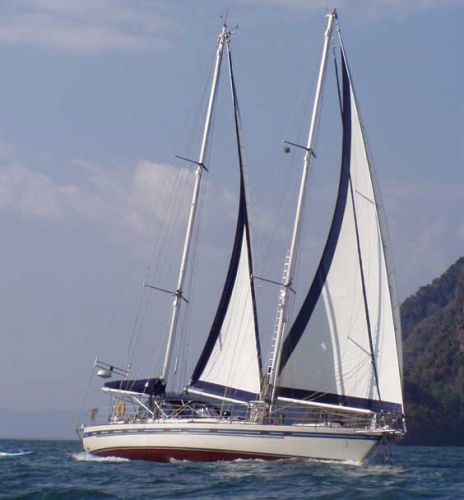
The most popular choices of yacht rigs include sloop, cutter, and ketch - in that particular order.  Sloop
has the virtue of simplicity, while ketch and cutter rigs will split the sail plan into more easily managed areas.  A ketch rig can sail under mizzen and headsail alone, while cutter rigs can offer a simple twin headsail with downwind option.

Essentials versus desirables
Before you begin looking for a yacht, make a list of what you must have then make a list of what would be nice to have.  There are many additions and add ons you can get for yachts, although they can get very expensive in a hurry.
When you shop for a yacht, always plan out your budget before you even start looking.  A nice yachtcan cost a lot of money, which is something you may need to save up for.  Yachts are great to sail on, especially for those who have a lot of money to spare.

Buying A Boat Trailer


A boat trailer is something you really can't go wrong with, as it is a dual purpose device.  It provides a convenient way to store the boat, and also allows you to explore new areas by taking your boat down the road.  Good trailers must perform both duties equally as good.

Most people buying boats are into getting the boat, and not the trailer.  They are more than willing to spend money on a boat, then end up getting a cheap trailer.  If you want the most from boating, these tips will help you with buying a trailer.
-  The total weight of the boat, gear, and motor should be in the mid range of trailer's carrying capacity.  You shouldn't pick a 2,500 capacity trailer if you have a boat with the same weight.
-  Go for larger diameter tires and wheels.  The larger tires will rotate less times per mile, producing less heat and wear on the tread.  The wheel bearings will last much longer as well, as they rotate less times per mile.

-  You should look for trailers with "drive on" capabilities.  These drive on trailers will allow you to drive the boat onto the trailer, close enough to the winch so that you only need to winch the boat up a few inches.

-  Select trailer lights (for the highway) that are protected and sealed against water.
-  Pick your trailer based on the environment it will be operating in. If you plan to launch in salt water, you'll need a trailer for that purpose.There are many types of trailers available, each one designed for a specific type of boating.
Although most are protected against weather and rust, you should always pick the one designed for the type of terrain you will be using your boat with.  This way, you have no worries about your trailer not doing the job it should be.
There are some trailers that include a spare tire, which is an excellent investment for those who plan to travel long distances.  Even though it can be hard to find trailer tires in the dark, it's still great to have a spare if you get a flat while you travel.
All in all, a boat trailer can save you a lot of time and money.  You can store your boat on your trailer when it isn't be used, even take it to other lakes or oceans.  A trailer will open up new roads for you and your boat - all you have to do is find one that you need.

Buying A Fishing Boat


Fishing from a boat is great fun for the whole family. It gives you access to those special fishing spots that can't be reached by land. Best of all, once you own a boat, every weekend is a family vacation.

Many people are surprised by how affordable it is to buy a fishing boat. But with so many options available, choosing one that fits your needs and budget can seem a bit daunting. To help simplify the process, here are a few tips for first-time buyers from the experts at the Recreational Boating and Fishing Foundation (RBFF).

1. How will you use it? Although fishing may be your primary activity, are there other things your family might want to do, such as water-skiing or cruising? Consider how many people you'll want to accommodate.

2. Where will you go? Do you plan to go on a lake, river or larger body of water, such as the Great Lakes or the ocean? If you plan to use your boat for overnight trips, look for one with a cabin, head and galley.

3. What's your budget? In assessing costs, factor in operating expenses such as fuel and maintenance, as well as dry-stack storage or slip fees if you plan to dock at a marina. If it starts looking a bit pricey, don't fret. A basic rowboat and trolling motor can be had for less than $2,000. You can also save by trailering your boat and using it for day trips.

4. New or used? If your budget is tight, a used boat is a good alternative. If you go for a new one, make sure it is National Marine Manufacturers Association (NMMA) certified.

5. Financing. Boats can be financed for extended terms, which helps keep the monthly payment low. Get in touch with a National Marine Bankers Association (NMBA) lender, or visit DiscoverBoating.com for more tips and a handy loan calculator.

6. Test the waters. Before you buy, rent a boat from a local marina and go fishing for the day. It's a great way to get the family hooked and helps you decide on the right boat for you.

Visit takemefishing.org for more boat-buying tips and information on where to fish in your area. The site also includes boat show and dealer listings. There's even a section with information on blue book values to help you get the best deal on your boat.


Wednesday, 21 September 2011

Building a 16 ft. Grand Banks dory


As a kid I did a lot of boat building, mainly scale models that were not able to sail, although I did actual build a few boats that were, more or less, capable of sailing. I even once build a 10 feet boat, or shall I say raft. I accomplished this with a few friends and we had great fun sailing it on the local river. It was not really water proof and while one person was rowing, the others had to make sure that they removed the water quicker then it was entering our boat.

Then sadly one day we failed. I was rowing at the time, and we were in the middle of the river when it was clear we were sinking. I stopped rowing to assist with the hosing, but this only slowed down the process of sinking, it did not stop it. So I started to row again in on effort to reach dry land before we sank, thus avoiding having to swim to safety.

And guess what: We made it! Just before the boat really started to sink we managed to jump ashore. Here we watched as our pride and joy slowly sank to the bottom of the river. It was then that we realised we were at the wrong side of the river and this left us with a problem. We either had to walk to the nearest bridge, 10 kilometers upriver, so that would have been a 20 kilometer walk, or swim to the other side.

We decided on swimming. We did not see anyone around, so we quickly undressed, and with one hand holding our clothes above the water, we managed to get back to our own side of the river. Just as we were struggling to get out of the water a group of girls from our own school were passing by, and I can tell you we were not happy!

This all happened a long time ago and a few times in my live I have had plans of building a boat again. I have spent a good amount of time looking at boat building plans, but with boats size does matter.

I usually looked at boats between 30 and 40 feet, but the sheer volume of work involved has always stopped me from going ahead with my boat building plans.

Now I have decided to start small. I am going to build a 16 feet Grand Banks dory, which I want to fit with a small outboard engine. I boughtl the boat building plans, I got the working space, and by the time you read this article I might be finished already.

Later, who knows, I might build a 40 feet cabin cruiser, and tow my Grand Banks dory behind me. Then, if my cabin cruises sinks, I can always row to safety in my Grand Banks dory, dry and with my clothes on.


Tuesday, 20 September 2011

Booking Crewed Sailing Charters – What You Need To Know


Crewed sailing charters are available to take you to sights you only dreamed about. These charters include staying on a yacht for a week at a time and dropping anchor in exotic ports of call. While at sea, you don’t need to lift a finger nor do you need to know how to handle as sailing yacht. This is what you hire the crew for – so you can sit back and relax. When you make the decision to book one of the many crewed sailing charters available, you have to decide where you want to go and what you want to see and do.

The fee you pay for crewed sailing charters may be different depending on the part of the world where you want to charter a sailing yacht. In North America, the cost includes the rent of the yacht, the fee for the captain and the crew, as well as insurance that you pay just in case of an accident. In addition to this cost, if you charter a crewed sailing yacht the cost of the provisions, berthing fees and fuel are extras and you do need to pay them when you arrive back at the starting port. In the Mediterranean, the cost of a crewed sailing charter also includes fuel, berthing charges and water that you need to have on board the yacht.

When you start looking at the types of charter yachts, you can choose either motor or sail crewed charters. If you choose crewed sailing charters, you will experience the thrill of sailing slowly along the ocean. This is often the choice of couples that want to experience the romance of the sea. The number of people that will be going with you on the crewed sailing yacht will also determine the type of boat you need to charter. A crewed yacht is generally available for charter for a week, but you can also book these charters on a daily basis. The length of time you choose for the charter will determine the number of places that you get to visit.

When you make up your budget for crewed yacht charters, you have to include the cost of return airfare to the destination where you will board the sailing yacht. Look at what the charter company includes in its costs and then make allowances for food, fuel, anchorage and of course shopping and entertainment in the various places you dock. Then when you total this list you can determine whether or not a crewed sailing yacht is within your budget. Usually people plan for this type of vacation several years in advance and save up the money they will need to book the charter.

Once you make the booking for crewed yacht charters, the company will send you a contract to sign. When you return the signed contract, you will also have to make a 25% - 50% deposit on the reservation or you may have to make this deposit even before you receive the contract. There will also be a detailed questionnaire for you to complete so that the crew will be able to provide you with the vacation you are looking for. You will have to pay the balance of the cost of crewed yacht charters one month prior to your departure date. This way the only extra money you have to take with you is what you plan to spend while on vacation.